(AsiaGameHub) - By: Christian Pierce
Poker’s high-stakes circuit faces a quiet crisis. Players chase rankings while risking life-changing sums. Adrian Mateos’ $4.3M victory at the 2026 WSOP Super High Roller exposes the brutal math of elite poker: win or vanish.
Mateos defeated 55 opponents in a $13.7M prize pool event. His sixth bracelet came after a six-week run netting $11.9M. The final table held $379M in combined career earnings. Bryn Kenney, the all-time money list leader, took second for $2.7M. Mateos now ranks fifth globally with $69.6M lifetime winnings.
This win cements high rollers as a closed ecosystem. Only nine players cashed. Phil Ivey bubbled at $533K. Mateos’ quote reveals the grind: “I love the rankings… Bryn is number one. It will be tough to catch him.” The industry’s endgame? Fewer whales, deeper stacks, and a relentless pursuit of legacy over liquidity.
Author bio: Christian Pierce, a chief financial columnist and markets commentator specializing in high-stakes gambling economics and player valuation models.

(AsiaGameHub) - By: Christian Pierce
Caesars’ new permanent WSOP retail store has left most gaming industry analysts confused. The company sold WSOP intellectual property to NSUS Group for $500 million in 2024. It’s launching the 2,320 square foot space right as 2026 WSOP attendance is falling across multiple key events. No one expects a seasonal pop-up to drive massive revenue, but a year-round store feels like a misstep at first glance.
Jack Binion, 89-year-old son of WSOP founder Benny Binion, cut the ribbon at the June 12 launch ceremony. The store sits in the corridor connecting Horseshoe and Paris Las Vegas, where the 57th annual WSOP runs through July 15. It is the largest dedicated WSOP retail space in history, with over 100 clothing, accessory and collectible designs. Half the space uses vintage saloon finishes to honor early WSOP history, the other leans into modern poker aesthetics. Caesars retained 20 years of Las Vegas live event hosting rights and select retail licensing rights when it sold the core IP.
The store solves a simple, low-risk commercial problem for Caesars. WSOP’s brand value still pulls in casual Strip tourists even in weak tournament years. It ties the WSOP identity firmly to Horseshoe Las Vegas, instead of letting new IP owner NSUS dilute that association elsewhere. Short-term attendance slumps stem from external factors: softer Canadian and UK travel to the US, and new tax rules cutting gambling loss deductions to 90% for US players. Those headwinds will fade long before Caesars’ 20-year hosting rights expire. Caesars will roll out identical small WSOP retail spots at all WSOP Circuit stop casino properties within 24 months.
Author bio: Christian Pierce, chief financial columnist and markets commentator specializing in gaming and hospitality industry analysis.

(AsiaGameHub) - By: Christian Pierce
Land-based casino operators in the Philippines have faced growing revenue pressure for years. Online gaming has captured a large share of local player spending, pulling revenue away from physical resort floors. Most operators long treated digital play as a separate, even competing, product line. That split has cut off potential repeat revenue from guests once they leave the resort property.
Okada Manila launched its Okada Online Casino Win Zone on June 12, on its mass-market gaming floor. The space features live-table gaming, live-slot products and eGaming demo stations. It serves as a physical showroom for the group’s PAGCOR-licensed Okada Online Casino, which is only available to players located in the Philippines. Guests can test the platform on-site, then continue playing the same offering after leaving the resort. Earlier in 2026, Okada parent Tiger Resort, Leisure and Entertainment signed an online gaming partnership with PhilWeb for its digital products, covering platform tech, content, customer service and marketing support.
This setup ties resort visits, loyalty accounts and online play into a single continuous experience for players. It eliminates the friction of introducing existing offline customers to the group’s digital offering. Every major land-based casino operator in the Philippines will roll out similar on-site online gaming showrooms by the end of 2027.
Author bio: Christian Pierce, chief financial columnist and markets commentator covering Southeast Asian gaming and hospitality sectors.

(AsiaGameHub) - By: Oliver Hawthorne
Dutch PC gamers are demanding €220 million back from Valve. They say Steam’s pricing and payment rules have overcharged them for years. This fight could upend how the entire PC gaming market sets prices.
The Consumer Competition Claims Foundation launched GameClaim to lead the charge. Early calculations put total overpayments at €220 million. Average users could get €130 plus interest. High-spending gamers might receive more. The claim covers three key grievances. First, Steam forces users to use its Wallet for in-game purchases, charging a 30% commission. No alternative payment processors are allowed, driving up costs for skins, loot boxes, and season passes. Second, Valve allegedly pressures publishers to keep prices the same on rival stores. Even platforms like Epic Games Store, which takes just 12% commission, can’t offer cheaper games. Valve denies this—Gabe Newell testified the company doesn’t dictate prices elsewhere. Third, the case revives old geo-blocking claims. In 2021, the EU fined Valve for blocking Eastern European keys in Western Europe, a decision later upheld by courts. Valve faces similar legal battles globally: Wolfire Games filed an antitrust suit in the US, a UK claim targets its commissions, and a New York case accuses it of loot box gambling.
Steam’s dominance creates a cycle of inflated prices. Publishers pass Valve’s 30% commission to consumers. They can’t cut prices on other platforms without risking access to Steam’s massive user base. This locks everyone into higher costs. If the Dutch claim wins, it will set a global precedent. Platforms will lose the power to force price parity. Consumers will finally see competitive pricing across PC gaming stores.
Author bio: Oliver Hawthorne, Principal Correspondent at TechGlobal Review, covers tech antitrust and gaming industry shifts with 10+ years of international reporting experience.

(AsiaGameHub) - By: Oliver Hawthorne
The biggest tension here isn’t just keeping kids safe online. It’s the clash between platform growth targets and strict new regional online safety rules. Major social platforms have long relied on teen users to drive ad inventory and network effect stickiness. This ban, if passed, will force them to rewrite core user onboarding and content recommendation logic overnight. Multiple platform compliance teams I’ve connected with already have emergency meetings scheduled this week to map risk exposure.
UK Prime Minister Keir Starmer’s plan follows Australia’s existing regulatory framework, dubbed an “Australia plus” model by The Guardian. It will ban under-16s from all major social platforms including TikTok, Instagram, X and YouTube. Gaming apps avoid an outright ban but must remove features like stranger chat for young users. Under-18s also lose access to romantic or sexual AI chatbots, and rules will target late-night algorithmic scrolling loops. The government may use existing Online Safety Act age verification powers, though new legislation could still be required.
Platforms won’t accept these restrictions passively. They will likely push for softer age verification rules that don’t cut off teen access entirely, while shifting more ad spend to adult-focused content verticals. The ban will also create a loophole for unregulated smaller apps that fly under the regulator’s radar, as teens seek workarounds via VPNs or fake accounts. Regulators must allocate at least triple their current online safety enforcement budget to track unregulated app providers for this policy to work.
Author bio: Oliver Hawthorne, Principal Correspondent for a leading global technology review, covering digital platform regulation for over a decade.

(AsiaGameHub) - By: Lucas Caldwell
The algos just front-ran a peace treaty. Bitcoin’s surge past $65,422 on June 14, 2026, wasn't about crypto adoption. It was a pure, cold macro risk unwind. Traders had priced the Strait of Hormuz closed. A single Truth Social post from Donald Trump flipped the script. The machines reacted before the diplomats finished their statements. This is the new market reality: geopolitical risk is now a high-frequency trade.
The official facts are stark. Trump announced the Iran deal was complete. He authorized the toll-free reopening of the Strait and removed the U.S. naval blockade. A formal signing is set for June 19 in Switzerland. Technical talks will cover demining and nuclear commitments. The Strait handles 20-25% of global seaborne oil trade. Reuters and The Guardian confirmed the deal, mediated by Pakistan. Oil prices tanked instantly. WTI fell 3.2% to $84.88. Brent dropped 3.4% to $87.33.
The subtext is a trader’s playbook. This conflict began on February 28, 2026, with U.S.-Israel strikes under Operation Epic Fury. Iran retaliated, closed the Strait with mines and drones, and a U.S. naval blockade followed on April 13. Crypto traders treated it as a macro risk trade: sell on escalation, buy on ceasefire talks. The pattern held. Lower oil means cooler inflation. That implies a less aggressive central bank rate path. Better liquidity. Bitcoin is the canary for that shift.
The game theory is now about the $65,000 level. Can it hold as support? Momentum depends on it. But the real volatility isn't over. The signing ceremony on June 19 is a potential pivot. Any hiccup in demining or compliance could flip sentiment instantly. The market has priced the peace. It hasn't priced the messy implementation. The billions in lost Iranian oil revenue and the delicate nuclear commitments are still live wires.
The capital is now betting the peace will hold, freeing liquidity for risk assets everywhere.
Author bio: Lucas Caldwell, a tech opinion leader with millions of followers on X/Twitter, dissecting the intersection of algorithmic trading, geopolitics, and digital asset flows.

(AsiaGameHub) - By: Adrian Kingsley
Brazil’s betting regulatory space has operated as an opaque black box for years. Potential operators had no clear public benchmark for licence approval. Consumers had no way to verify if a betting platform met legal compliance standards. Regulators had no formal mechanism for public oversight of licensing decisions. That long-standing deadlock just broke entirely.
The Ministry of Finance officially announced it will release over 25,000 redacted fixed odds betting licence files. All personal data and confidential commercial information will be stripped before publication. A joint task force with the Comptroller General of the Union will oversee the review process. Cleared documents will be posted publicly on the ministry’s official website. The government frames the move as a core part of its commitment to administrative transparency. For industry players, the files will lay out clear, real-world standards for licensing approval and compliance requirements.
The announcement coincides with planned heightened regulatory oversight during the upcoming FIFA World Cup. The Secretary of Prizes and Betting, or SPA, has already coordinated with prosecutors and consumer protection bodies to align enforcement. Advertising will be a top priority, with strict checks on bonus offers, celebrity campaigns, influencer content and underage exposure, per rules set out in Law No. 14.790/2023. Brazil will also host its first Responsible Gaming Seminar on June 16 to formalize expectations for operators ahead of expected betting surges. The unstated core goal is to curb the wave of unregulated betting activity that usually accompanies major football tournaments.
This policy shift will lock in a formal two-tier market structure for Brazilian betting, where licensed compliant operators gain long-term regulatory certainty and unlicensed actors face near-total erasure from the local market within a year.
Author bio: Adrian Kingsley, an internationally renowned public administration scholar with 18 years of research on global gaming regulatory frameworks.

(AsiaGameHub) - By: Robert Kensington
This is a classic, brutal case of capital following growth and leaving regulatory baggage behind. The board’s decision to abandon London isn't about sentiment; it's a cold calculation that the UK market no longer justifies the administrative overhead.
[Official Announcement Facts]: Flutter Entertainment will drop its London Stock Exchange listing on August 3, 2026. Shares will trade there for the final time on July 31. The company will keep its New York Stock Exchange listing under FLUT. The board reviewed trading volume, listing costs, and UK regulatory duties. They decided London no longer served the company or shareholders. New York became the primary listing venue in 2024.
[True Commercial Intentions]: The pivot was always about FanDuel. US sports betting and online gaming drive growth. Institutional trading concentrated in New York. Reuters data shows the US generated 42% of Flutter revenue. FanDuel holds a 39% share of the US online sports betting market. The Irish Stock Exchange was already jettisoned. London is just the next cost center to be cut. The $19 billion company is simplifying its story for US investors.
This reshuffling makes Flutter a pure-play US betting stock. European assets like Betfair and Paddy Power become legacy operations. The market will now value the firm based on FanDuel's margins and stateside expansion. London’s loss is a definitive signal. The real money in gambling flows through American wallets and Wall Street’s ledger.
Author bio: Robert Kensington, an overseas entrepreneurial veteran with decades of experience in real-economy industrial investment and expansion.

(AsiaGameHub) - By: Robert Kensington
This isn't a pause. It's a surrender. Acesite's decision to freeze the Waterfront Manila Pavilion rebuild until 2028 isn't a cautious delay; it's a brutal admission that the post-pandemic tourism and gaming recovery story in the Philippines is fundamentally broken. Management is staring at a spreadsheet where costs have exploded and demand has evaporated. They’re not waiting for a better time. They’re waiting for a miracle.
[Official Release Facts]: The board approved the suspension via a Philippine Stock Exchange filing. Reconstruction costs have ballooned to PHP3.6 billion, more than double the earlier estimate that relied on PHP1.5 billion in insurance from the 2018 fire. The company had PHP764 million in retained earnings earmarked but now refuses to pour more in. They cite soaring prices for materials, labor, fuel, plus extra structural work. The old plan, a phased soft launch in Q1 2026, is dead. The hotel will stay closed, with only annual maintenance funded to keep the shell safe.
[True Commercial Intentions]: The cost overruns are a convenient scapegoat. The real story is a complete loss of faith in the market's near-term viability. Management explicitly states reopening talks won't resume before 2028 unless "key industry numbers improve." They list the real killers: weak foreign room sales, a stalled tourism recovery they blame on the "protracted U.S.-Israel-Iran war," and a "serious plateau" in Manila casino demand as online gaming cannibalizes it. Even visa-free access for Chinese tourists hasn't moved the needle. This isn't a construction halt. It's a capital strike.
The company is demanding a specific return threshold: visitor arrivals, hotel occupancy, average room rates, and gaming revenues must be strong enough to support debt and deliver investment returns. Their cold, calculated verdict? "The earliest estimate of this is 2028." They are essentially writing off the next four years. This isn't planning. It's hibernation.
This move signals a harsh reality check for Manila's integrated resort district. When a major player mothballs a prime asset for half a decade, it's a vote of no confidence in the entire local ecosystem. Expect capital to flow elsewhere, and watch for competitors to reassess their own expansion plans. The market share reshuffle won't be about who grows fastest, but who can survive the longest winter with the deepest pockets.
Author bio: Robert Kensington, an overseas entrepreneurial veteran with decades of experience in real-economy industrial investment and expansion across Southeast Asia.

(AsiaGameHub) - By: Jonathan Barrett
The CFTC is suing New Mexico to block state gambling enforcement. This opens another court fight over sports event contracts. It is a raw jurisdictional power grab. The agency wants to stop state officials from enforcing local laws. They claim prediction markets are federally regulated derivatives. States see them as unlicensed online betting. This legal battle defines who controls the sector. It is a fight over black letter law versus state sovereignty. The timing is aggressive. The CFTC is asserting dominance before states can consolidate their grip.
Chairman Michael Selig frames this as protecting exclusive jurisdiction. He argues New Mexico is trying to nullify decades of precedent. The lawsuit follows a separate action by Attorney General Raúl Torrez against Kalshi. The CFTC filing insists states cannot use gambling laws to control derivatives exchanges. They point to earlier federal rulings that blocked state action. This legal posture is rigid. The agency believes it has the sole expertise to regulate these markets. They are not interested in a compromise on gambling policy.
New Mexico argues Kalshi bypassed strict gaming frameworks. The state only allows sports betting at physical tribal casinos. Torrez claims the operator ignored rules on compulsive gambling entirely. New Mexico is now the eighth state sued by the CFTC. It joins Rhode Island, Minnesota, Wisconsin, and New York among others. The agency says these states are invading the Commission's exclusive jurisdiction over swaps. Nevada remains the key exception where courts ruled against the platforms. This creates a fragmented map of enforcement across the country.
Legal timing explains the CFTC's sudden aggression. The agency released proposed prediction market rules this week. These rules would allow many sports event contracts. They would limit contracts tied to injuries or officiating decisions. State gaming regulators see this federal plan as online sports betting in disguise. The CFTC views it as standard commodity derivatives oversight. This semantic difference drives the entire conflict. One side sees a financial instrument. The other sees a slot machine on a smartphone.
Operators are caught in the crossfire of this federal versus state war. Kalshi and similar platforms must navigate these contradictory legal landscapes. They rely on federal backing to operate online without state gambling licenses. This strategy works until a state decides to fight back. The CFTC is effectively providing legal cover for these companies. They are drawing a line around the derivatives market. States are losing their ability to police what happens on their own soil. The federal preemption argument is winning so far.
The federal government will eventually force a unified regulatory framework that renders state gambling compacts obsolete for digital prediction markets.
Author bio: Jonathan Barrett, a lead focus editor for an independent overseas public affairs weekly.
(AsiaGameHub) - By: Adrian Kingsley
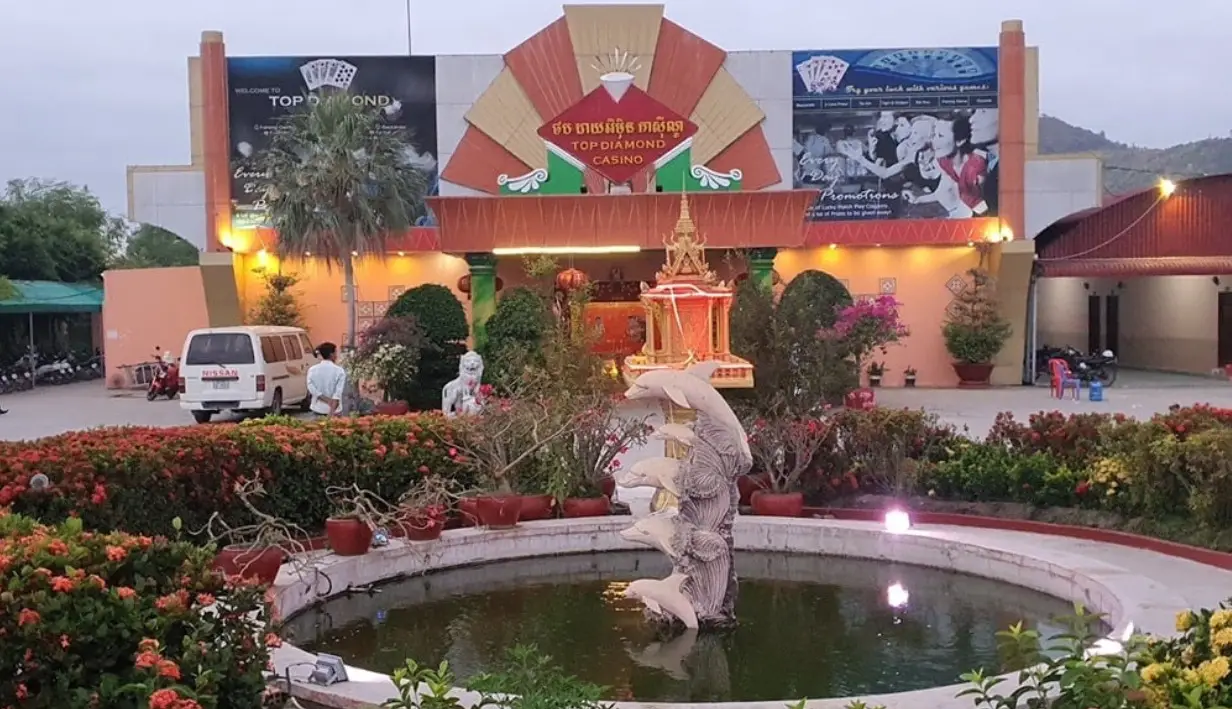
Cambodia’s revocation of Roxy Hotel & Casino’s license isn’t just a routine enforcement act. It’s a high-stakes test of the country’s ability to rein in a casino sector tangled with online scams and human rights abuses. The move comes amid mounting external pressure to crack down on criminal networks operating under licensed premises.
Officially, the Commercial Gambling Management Commission (CGMC) pulled Radiant Pearl Investment Ltd.’s license after reviewing devices seized in a May 21 raid. Officers detained 25 Chinese nationals and took phones, computers, and surveillance gear. The CGMC has since asked the Cambodia Financial Intelligence Unit for bank account details tied to the company’s owners. This material will go to Svay Rieng Provincial Court prosecutors for further action. Industry insiders know Bavet’s proximity to Vietnam makes this action far more sensitive. The border town is a key casino hub, and any misstep risks alienating cross-border investors or drawing further international scrutiny.
Authorities cite 91 casino closures in April and 250 scam center raids over nine months as proof of progress. But Amnesty International’s April report links casino complexes to trafficking and forced labor. The real impact goes beyond numbers. Casino operators now face strict demands to vet tenants, bank routes, and connected businesses for fraud ties. This compliance overhaul will strain smaller operators who lack resources for rigorous checks. It also forces regulators to balance enforcement with protecting a sector that drives local economic activity.
Cambodia’s casino sector governance will remain a fragile balance between revenue and regulatory credibility.
Author bio: Adrian Kingsley, an internationally renowned scholar specializing in public administration and cross-border regulatory policy.
(AsiaGameHub) - By: Elena Rostova
Finland's draft gambling rules are out. They cap online slot stakes. Under 25: €10 per spin. Older: €20. Autoplay's banned. Spins must last 2.5 secs. Consultation ends Aug 5, 2026. Ministry released rules under Gambling Act 10/2026. Focus on player harm, loss limits, RTP. Over 50 licence apps. Online slots need manual starts. Game info must be clear. 15-min play reminders. RTP varies by game. Loss limits differ by age. Venues and machines capped. Helsinki casino open till 4am. Reform ends Veikkaus' monopoly. Author bio: Elena Rostova, public policy expert specializing in gambling compliance evaluations.
(AsiaGameHub) - By: Robert Kensington
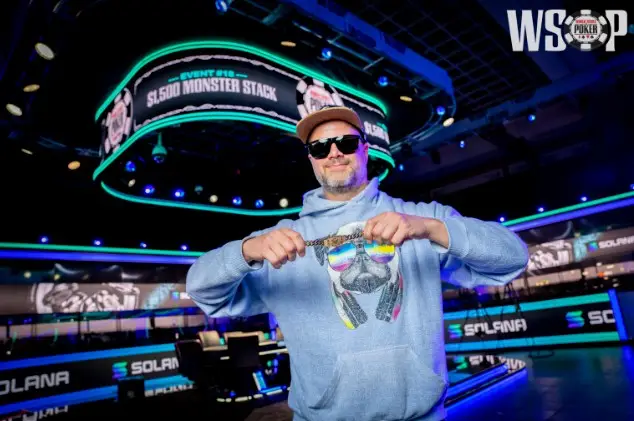
Richard Alsup claimed Event #18: $1,500 Monster Stack at 2026 WSOP. He turned 11,933 entries into $1,302,125. His second WSOP bracelet and first seven-figure live score. Prize pool hit $15,841,057. Salvatore Dicarlo took second for $900,000.
Alsup outlasted a massive field. His new score is almost five times his prior best. Career earnings now over $3.9M. "I stayed positive and felt I'd win," he told PokerNews. The Monster Stack is known for big fields and life-changing payouts.
Final table had pros. Alsup started sixth. He cracked Dicarlo's aces twice. Heads-up, he survived river help. Final hand: ace-seven beat ace-king. Dicarlo got $900K, Alsup the bracelet. Poker's a game of moments; Alsup's win cements his spot.
Author bio: Robert Kensington, overseas entrepreneurial veteran with decades in real-economy investment and expansion.

(AsiaGameHub) - By: Ethan Gallagher
Pokémon Go players didn’t sign up to fuel defense tech. But their casual PokéStop scans are now tangled in a partnership between Niantic Spatial and Vantor, a firm focused on military-grade navigation. The denials from both companies feel like thin smoke covering a bigger fire.
Official facts tell a clean story. Scopely bought Niantic’s game division, including Pokémon Go, for $3.5 billion in 2025. Niantic Spatial, the geospatial AI arm left behind, announced a December 2025 partnership with Vantor. The goal is a GPS-denied positioning system for drones and autonomous platforms. Both firms insist Vantor never received Pokémon Go scan data. Industry subtext paints a murkier picture. Vantor’s core work is defense-focused navigation. Any link to consumer-generated geospatial data raises immediate red flags, even if the data itself isn’t directly shared.
Official statements double down on separation. Niantic Spatial says it lost access to Pokémon Go data once the game moved to Scopely. It adds those scans were just one input for its AI models. Vantor claims it relies solely on its own satellite imagery and 3D data. But the subtext lingers. Niantic Spatial used years of player scans to train its geospatial AI before the split. That trained tech is now being paired with Vantor’s defense systems. Players opted in to build better AR experiences, not to contribute to tools that could be used in military operations.
Defense tech supply chains will keep quietly tapping consumer data pools, no matter how many corporate splits or denials companies hide behind.
Author bio: Ethan Gallagher, a Silicon Valley Hardware Architect and Infrastructure Strategist with 15 years designing geospatial and defense-focused tech systems.
(AsiaGameHub) - By: Christian Pierce
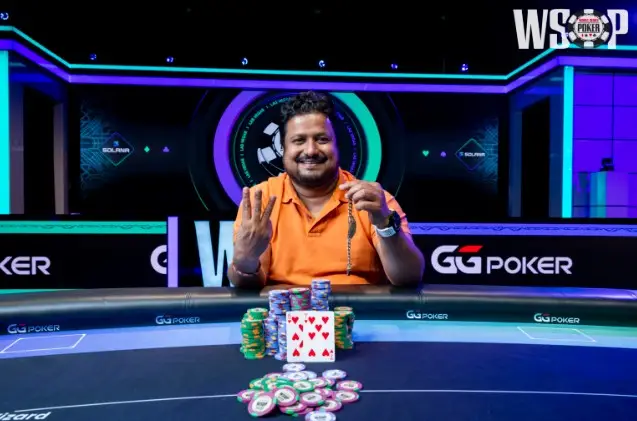
Santhosh Suvarna claimed his third WSOP bracelet by winning Event #29: $50K High Roller. He took home $1,922,870. The event had 167 entries, a $7.9M prize pool, and 26 paid. Suvarna now shares India’s WSOP bracelet record with Nipun Java.
Suvarna’s live earnings exceed $22.6M. His latest win boosts Indian poker’s profile. The final table saw Zlotnikov early, then Suvarna closed gaps. He beat Lee heads-up. His $1.9M is third-largest career score.
Author bio: Christian Pierce, chief financial columnist focusing on poker’s competitive and financial dynamics.

(AsiaGameHub) - By: Robert Kensington
Most industry observers write this off as a routine compliance check. Most big regulated betting operators join IBIA just to check a box for regulators. But there is far more going on under the surface here. I chatted with a mid-sized European betting operator last month over coffee. He told me any operator that won’t join these days is definitely hiding something.
The official announcement lays out clear, positive talking points. BOYLE Sports will join IBIA's global monitoring and alert network. It will share data on suspicious betting patterns with regulators and law enforcement. IBIA's network already includes more than 90 companies and 200 betting brands. The platform monitors over $300 billion in annual sports betting turnover. BOYLE says the move reflects its commitment to transparent, responsible betting.
The unspoken industry goal here is much more practical. Joining IBIA gives BOYLE more credibility with European regulators. Regulators across the continent are cracking down on unethical betting activity. BOYLE is a major licensed player across Ireland, Great Britain and Gibraltar. It has high profile sports sponsorships that put it under public scrutiny. It needs to shore up its reputation to expand into new regulated markets. IBIA gets more scale and broader sports coverage for its monitoring work. More members mean more data, which makes the entire network more effective.
This wave of big regulated operators joining IBIA will squeeze unregulated smaller players out of key European markets.
Author bio: Robert Kensington, an overseas entrepreneurial veteran with decades of experience in global gaming industry investment and expansion.
(AsiaGameHub) - By: Elena Rostova
South Korea blocks 1,280 illegal betting sites ahead of World Cup 2026. Regulators fear unlicensed ops target fans. Jan-June 8 saw 5,279 correction cases. World Cup runs June 11 to July 19. Blocked sites cover more than football. Live betting a key concern. Unlicensed sites steal funds. Case numbers climb. 2024 had 69,350 cases. Korea's strict gambling rules stay.
Author bio: Elena Rostova, public policy expert specializing in compliance assessments for governments or sovereign wealth funds
(AsiaGameHub) - By: Robert Kensington
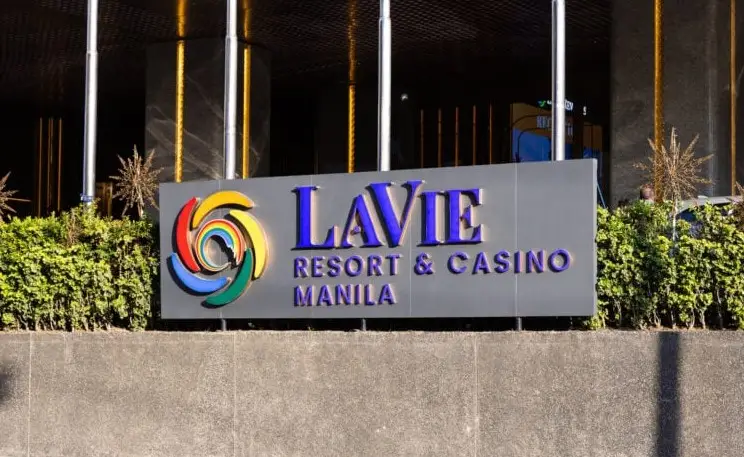
International Entertainment Corp is making a bold move by entering the Philippine online gaming scene through a new deal with Total Gamezone Xtreme Inc, a DigiPlus unit. This isn't a从零开始 build of an online gaming platform. Instead, its Philippine subsidiary, New Coast Leisure Inc, will collaborate with TGXI on various aspects like game aggregation and software support.
The deal gives International Entertainment a quicker route into the Philippine online casino and e gaming market. It links LaVie Resort & Casino Manila to DigiPlus' infrastructure at a time when the Philippine digital gaming market is attracting investor attention. The agreement, set for two years with annual renewals, aims to reduce the time and cost of platform development. NCLI will handle the licence side, while TGXI provides the technology and content layer.
Pagcor approval is crucial for starting the online gaming business. NCLI already has several Pagcor permits. International Entertainment also received legal advice stating that the operations would comply with local law and not violate Hong Kong Gambling Ordinance due to restricted access within the Philippines. The local access point is significant as it allows regulated operators to serve domestic players under Pagcor's oversight. DigiPlus already has a large role in Philippine digital gaming, and TGXI brings its experience to the LaVie project. The Philippine online gaming market is expected to reach nearly $9.9 billion by 2033, with an 8.29% compound annual growth rate from 2025 to 2033. This move could broaden the company's revenue base and create new growth drivers.
Author bio: Robert Kensington, an overseas entrepreneurial veteran with decades of experience in real-economy industrial investment and expansion.
(AsiaGameHub) - By: Logan Pierce
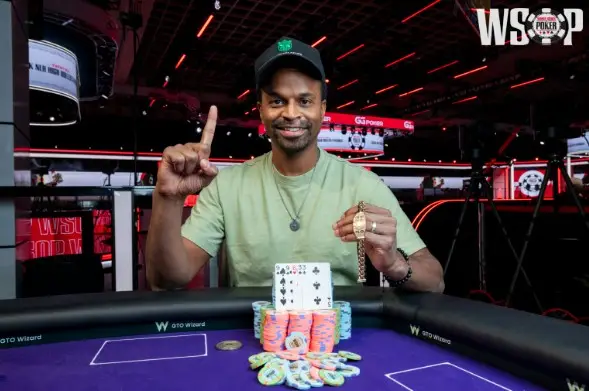
Christopher Alcindor claimed his first WSOP bracelet with a $387,110 win in Event 37: $1,500 Big O. The Canadian poker pro topped 2,150 entries. His prior best was $42,625.
The $1,500 Big O saw Alcindor dominate late. He eliminated final three players. Tens full of aces sent one out, kings up got another.
Final table had pros like Abrams and Koral. Results: Alcindor 1st, Roullier 2nd, Abrams 3rd. Author bio: Logan Pierce, independent business researcher tracking gaming tournament dynamics.
(AsiaGameHub) - By: Christian Pierce
Strategy, formerly MicroStrategy, has been making waves in the crypto market. After selling 32 BTC for about $2.5 million to fund preferred stock dividends, it quickly bought 1,550 BTC for $101 million. This shows they might sell small amounts when needed but still aim to grow their Bitcoin holdings. The company now holds 845,256 BTC, leading as the largest public corporate holder. They also increased their dollar reserve by $100 million to $1 billion, likely to handle dividend payments without over-relying on Bitcoin sales.
Author bio: Christian Pierce, chief financial columnist and markets commentator.