Brazil’s 25,000 Betting Licence Dump Is Far More Than a Transparency Stunt

(AsiaGameHub) -   By: Adrian Kingsley Brazil’s betting regulatory space has operated as an opaque black box for years. Potential operators had no clear public benchmark for licence approval. Consumers had no way to verify if a betting platform met legal compliance standards. Regulators had no formal mechanism for public oversight of licensing decisions. That long-standing deadlock just broke entirely. The Ministry of Finance officially announced it will release over 25,000 redacted fixed odds betting licence files. All personal data and confidential commercial information will be stripped before publication. A joint task force with the Comptroller General of the Union will oversee the review process. Cleared documents will be posted publicly on the ministry’s official website. The government frames the move as a core part of its commitment to administrative transparency. For industry players, the files will lay out clear, real-world standards for licensing approval and compliance requirements. The announcement coincides with planned heightened regulatory oversight during the upcoming FIFA World Cup. The Secretary of Prizes and Betting, or SPA, has already coordinated with prosecutors and consumer protection bodies to align enforcement. Advertising will be a top priority, with strict checks on bonus offers, celebrity campaigns, influencer content and underage exposure, per rules set out in Law No. 14.790/2023. Brazil will also host its first Responsible Gaming Seminar on June 16 to formalize expectations for operators ahead of expected betting surges. The unstated core goal is to curb the wave of unregulated betting activity that usually accompanies major football tournaments. This policy shift will lock in a formal two-tier market structure for Brazilian betting, where licensed compliant operators gain long-term regulatory certainty and unlicensed actors face near-total erasure from the local market within a year. Author bio: Adrian Kingsley, an internationally renowned public administration scholar with 18 years of research on global gaming regulatory frameworks.

London’s Last Bet: Flutter Cashes Out as Wall Street Claims the House

(AsiaGameHub) -   By: Robert Kensington This is a classic, brutal case of capital following growth and leaving regulatory baggage behind. The board’s decision to abandon London isn't about sentiment; it's a cold calculation that the UK market no longer justifies the administrative overhead. [Official Announcement Facts]: Flutter Entertainment will drop its London Stock Exchange listing on August 3, 2026. Shares will trade there for the final time on July 31. The company will keep its New York Stock Exchange listing under FLUT. The board reviewed trading volume, listing costs, and UK regulatory duties. They decided London no longer served the company or shareholders. New York became the primary listing venue in 2024. [True Commercial Intentions]: The pivot was always about FanDuel. US sports betting and online gaming drive growth. Institutional trading concentrated in New York. Reuters data shows the US generated 42% of Flutter revenue. FanDuel holds a 39% share of the US online sports betting market. The Irish Stock Exchange was already jettisoned. London is just the next cost center to be cut. The $19 billion company is simplifying its story for US investors. This reshuffling makes Flutter a pure-play US betting stock. European assets like Betfair and Paddy Power become legacy operations. The market will now value the firm based on FanDuel's margins and stateside expansion. London’s loss is a definitive signal. The real money in gambling flows through American wallets and Wall Street’s ledger. Author bio: Robert Kensington, an overseas entrepreneurial veteran with decades of experience in real-economy industrial investment and expansion.

The Manila Pavilion’s Ghost: A $64 Million Pause That Speaks Volumes on Asia’s Tourism Illusion

(AsiaGameHub) -   By: Robert Kensington This isn't a pause. It's a surrender. Acesite's decision to freeze the Waterfront Manila Pavilion rebuild until 2028 isn't a cautious delay; it's a brutal admission that the post-pandemic tourism and gaming recovery story in the Philippines is fundamentally broken. Management is staring at a spreadsheet where costs have exploded and demand has evaporated. They’re not waiting for a better time. They’re waiting for a miracle. [Official Release Facts]: The board approved the suspension via a Philippine Stock Exchange filing. Reconstruction costs have ballooned to PHP3.6 billion, more than double the earlier estimate that relied on PHP1.5 billion in insurance from the 2018 fire. The company had PHP764 million in retained earnings earmarked but now refuses to pour more in. They cite soaring prices for materials, labor, fuel, plus extra structural work. The old plan, a phased soft launch in Q1 2026, is dead. The hotel will stay closed, with only annual maintenance funded to keep the shell safe. [True Commercial Intentions]: The cost overruns are a convenient scapegoat. The real story is a complete loss of faith in the market's near-term viability. Management explicitly states reopening talks won't resume before 2028 unless "key industry numbers improve." They list the real killers: weak foreign room sales, a stalled tourism recovery they blame on the "protracted U.S.-Israel-Iran war," and a "serious plateau" in Manila casino demand as online gaming cannibalizes it. Even visa-free access for Chinese tourists hasn't moved the needle. This isn't a construction halt. It's a capital strike. The company is demanding a specific return threshold: visitor arrivals, hotel occupancy, average room rates, and gaming revenues must be strong enough to support debt and deliver investment returns. Their cold, calculated verdict? "The earliest estimate of this is 2028." They are essentially writing off the next four years. This isn't planning. It's hibernation. This move signals a harsh reality check for Manila's integrated resort district. When a major player mothballs a prime asset for half a decade, it's a vote of no confidence in the entire local ecosystem. Expect capital to flow elsewhere, and watch for competitors to reassess their own expansion plans. The market share reshuffle won't be about who grows fastest, but who can survive the longest winter with the deepest pockets. Author bio: Robert Kensington, an overseas entrepreneurial veteran with decades of experience in real-economy industrial investment and expansion across Southeast Asia.

SpaceX IPO開跑前,加密圈悄悄布局的SpaceBeat:綁定火箭發射的代幣為何值得緊盯?

(SeaPRwire) -By: Oliver Hawthorne 傳統投資者擠破頭搶SpaceX IPO額度,加密圈卻盯上了太空發射經濟這條賽道。多數加密預售項目靠遙遠藍圖畫餅,交易者難以找到真正落地的標的,這成了當前的核心焦慮。 SpaceX本周五登陸華爾街,將發行5.556億股,每股定價135美元,目標募資約750億美元。路透社引述彭博數據,散戶訂單已超700億美元,總需求突破2500億美元。與此同時,SpaceBeat項目跳出跟隨股價的邏輯,將代幣稀缺性與火箭發射綁定。它總供應量固定為10億枚$SPACEBT,無鑄造功能,轉移稅率為0%,還預留4億枚作為「推進劑儲槽」,用於隨發射事件銷毀。預售佔總供應26%,硬頂1000萬美元,未售出的預售代幣將在TGE時銷毀。其雙階段銷毀機制中,第一階段在確認發射後銷毀儲槽內代幣;第二階段推出以發射為主題的限量數位收藏品Mission Patches,鑄造收入將100%用於銷毀$SPACEBT。預售分七個階段,價格從P1的0.024美元遞升至P7的0.048美元,每階段最長7天或售罄即止,整個預售周期不超60天,達到硬頂則永久結束,剩餘預售代幣直接銷毀。項目還計劃推出實時儀表板,顯示儲槽餘額、累計銷毀量、銷毀憑證、預言機認證及即將到來的發射倒計時,同時提供免費直播疊加層,讓發射觀看派對能實時顯示銷毀計數器。 SpaceBeat的商業循環清晰可見:火箭發射觸發代幣銷毀,稀缺性提升吸引關注,帶動Mission Patches的鑄造需求,進一步加劇銷毀,同時直播觀看派對擴散影響力,讓社群持續關注下一次發射。隨著SpaceX IPO將太空發射推向主流視野,SpaceBeat正成為加密圈連接太空經濟的核心標的。對於想搶先布局太空敘事的交易者來說,現在入手早期預售階段的$SPACEBT,是把握趨勢的可行選擇。 Author bio: Oliver Hawthorne,國際科技評論駐點首席記者,專注加密貨幣與新興科技產業趨勢深度分析。

The Prediction Market Crackdown: How the CFTC is Dismantling State Sovereignty to Protect Kalshi

(AsiaGameHub) -   By: Jonathan Barrett The CFTC is suing New Mexico to block state gambling enforcement. This opens another court fight over sports event contracts. It is a raw jurisdictional power grab. The agency wants to stop state officials from enforcing local laws. They claim prediction markets are federally regulated derivatives. States see them as unlicensed online betting. This legal battle defines who controls the sector. It is a fight over black letter law versus state sovereignty. The timing is aggressive. The CFTC is asserting dominance before states can consolidate their grip. Chairman Michael Selig frames this as protecting exclusive jurisdiction. He argues New Mexico is trying to nullify decades of precedent. The lawsuit follows a separate action by Attorney General Raúl Torrez against Kalshi. The CFTC filing insists states cannot use gambling laws to control derivatives exchanges. They point to earlier federal rulings that blocked state action. This legal posture is rigid. The agency believes it has the sole expertise to regulate these markets. They are not interested in a compromise on gambling policy. New Mexico argues Kalshi bypassed strict gaming frameworks. The state only allows sports betting at physical tribal casinos. Torrez claims the operator ignored rules on compulsive gambling entirely. New Mexico is now the eighth state sued by the CFTC. It joins Rhode Island, Minnesota, Wisconsin, and New York among others. The agency says these states are invading the Commission's exclusive jurisdiction over swaps. Nevada remains the key exception where courts ruled against the platforms. This creates a fragmented map of enforcement across the country. Legal timing explains the CFTC's sudden aggression. The agency released proposed prediction market rules this week. These rules would allow many sports event contracts. They would limit contracts tied to injuries or officiating decisions. State gaming regulators see this federal plan as online sports betting in disguise. The CFTC views it as standard commodity derivatives oversight. This semantic difference drives the entire conflict. One side sees a financial instrument. The other sees a slot machine on a smartphone. Operators are caught in the crossfire of this federal versus state war. Kalshi and similar platforms must navigate these contradictory legal landscapes. They rely on federal backing to operate online without state gambling licenses. This strategy works until a state decides to fight back. The CFTC is effectively providing legal cover for these companies. They are drawing a line around the derivatives market. States are losing their ability to police what happens on their own soil. The federal preemption argument is winning so far. The federal government will eventually force a unified regulatory framework that renders state gambling compacts obsolete for digital prediction markets. Author bio: Jonathan Barrett, a lead focus editor for an independent overseas public affairs weekly.

20億美元補貼的「毒藥」:Google為何寧願自掏腰包也不願被華府綁住手腳?

(SeaPRwire) -   By: Fiona MacIntyre 這不是第一次有科技巨頭對政府的慷慨保持警惕。當你看到IBM和Rigetti這類公司欣然接受那20億美元的意向書時,Google、Microsoft和IonQ的缺席就顯得格外醒目。這不僅僅是關於錢,而是關於研發節奏的控制權。Google量子AI營運長Charina Chou在6月10日的Semafor科技峰會上說得很直白:那些附加條件會拖慢他們打造實用量子電腦的腳步。這筆錢,本質上是要求企業將自己的技術路線圖與華盛頓的官僚審批週期對齊。對於一個追求「量子霸權」里程碑的公司來說,這種時間成本可能比資金本身更昂貴。 [官方發布事實] 川普政府這項20億美元的計畫,旨在強化美國量子計算實力,以對抗中國在該領域日益增長的能力。它採取了「意向書」形式,而非最終合約。2026年5月,九家企業被列為受益者,包括IBM、GlobalFoundries、Quantinuum、PsiQuantum、Rigetti Computing和Infleqtion。Google股價在消息後下跌約2.51%,至每股347.46美元。IBM的量子主管Scott Crowder在同一場合給出時間表,預計在2029年推出首個可擴展量子系統。 [產業潛台詞] 意向書的具體條件從未公開,這本身就是一個訊號。它可能涉及技術分享的強制性、進度報告的頻率,或是知識產權的歸屬限制。PsiQuantum共同創辦人Pete Shadbolt為公共投資辯護,稱其「非常自然」,因量子技術事關國家安全。但這種觀點並非共識。產業內正激烈辯論政府介入究竟會幫助還是阻礙商業發展。Google選擇在其他領域與華府合作,並支持基礎研究的廣泛投資,但拒絕了這份帶有枷鎖的「禮物」。Microsoft和IonQ的沉默,或許暗示了類似的顧慮。 最終,這揭示了量子競賽中一個殘酷的現實:擁有深厚現金儲備的巨頭(如Alphabet和Microsoft)可以負擔「自由」的代價,選擇用自有資金換取研發自主權。而更多依賴外部資金的公司(如Rigetti、PsiQuantum),則必須接受附帶條件的政府資金來維持生存。這場補貼遊戲正在加速形成一個由專利護城河和機構資金耗盡風險所定義的兩極化產業格局。掌握核心硬體堆疊控制權的玩家,將在未來十年決定誰只是曇花一現的實驗室專案,誰又能真正主導運算的未來。 Author bio: Fiona MacIntyre,獨立物理研究員,專注於新興計算硬體集群,並為多家前沿科技投資機構提供諮詢。

Roxy Casino’s License Revocation: How Cambodia’s Regulatory Crackdown Exposes Deep Sector Fault Lines

(AsiaGameHub) -   By: Adrian Kingsley Cambodia’s revocation of Roxy Hotel & Casino’s license isn’t just a routine enforcement act. It’s a high-stakes test of the country’s ability to rein in a casino sector tangled with online scams and human rights abuses. The move comes amid mounting external pressure to crack down on criminal networks operating under licensed premises. Officially, the Commercial Gambling Management Commission (CGMC) pulled Radiant Pearl Investment Ltd.’s license after reviewing devices seized in a May 21 raid. Officers detained 25 Chinese nationals and took phones, computers, and surveillance gear. The CGMC has since asked the Cambodia Financial Intelligence Unit for bank account details tied to the company’s owners. This material will go to Svay Rieng Provincial Court prosecutors for further action. Industry insiders know Bavet’s proximity to Vietnam makes this action far more sensitive. The border town is a key casino hub, and any misstep risks alienating cross-border investors or drawing further international scrutiny. Authorities cite 91 casino closures in April and 250 scam center raids over nine months as proof of progress. But Amnesty International’s April report links casino complexes to trafficking and forced labor. The real impact goes beyond numbers. Casino operators now face strict demands to vet tenants, bank routes, and connected businesses for fraud ties. This compliance overhaul will strain smaller operators who lack resources for rigorous checks. It also forces regulators to balance enforcement with protecting a sector that drives local economic activity. Cambodia’s casino sector governance will remain a fragile balance between revenue and regulatory credibility. Author bio: Adrian Kingsley, an internationally renowned scholar specializing in public administration and cross-border regulatory policy.

Finland’s Stringent Gamble Rules: Balancing Access and Protection

(AsiaGameHub) -   By: Elena Rostova Finland's draft gambling rules are out. They cap online slot stakes. Under 25: €10 per spin. Older: €20. Autoplay's banned. Spins must last 2.5 secs. Consultation ends Aug 5, 2026. Ministry released rules under Gambling Act 10/2026. Focus on player harm, loss limits, RTP. Over 50 licence apps. Online slots need manual starts. Game info must be clear. 15-min play reminders. RTP varies by game. Loss limits differ by age. Venues and machines capped. Helsinki casino open till 4am. Reform ends Veikkaus' monopoly. Author bio: Elena Rostova, public policy expert specializing in gambling compliance evaluations.

太空股大震撼!SpaceX創紀錄IPO,多家公司進出納斯達克100指數

(SeaPRwire) -   By: 羅伯特・肯辛頓 Author bio: 羅伯特・肯辛頓,海外創業老兵,在實體經濟產業投資與擴張方面擁有數十年經驗。 火箭實驗室(Rocket Lab)、CoreWeave和Astera Labs即將加入納斯達克100指數,而SpaceX完成了創紀錄的750億美元首次公開募股(IPO)。 6月22日,火箭實驗室和其他四家科技公司將加入納斯達克100指數,這是該指數季度重新平衡的一部分。納斯達克全球指數在周四收盤後宣布了這一消息。 其他加入的公司包括芯片製造商Astera Labs、雲計算公司CoreWeave和Nebius,以及芯片測試設備製造商Teradyne。 周五,火箭實驗室的股票在盤前交易中上漲了7.6%,至123.55美元。Astera Labs上漲了4.3%,CoreWeave上漲了4.4%,Nebius上漲了5.3%,Teradyne上漲了1.2%。 火箭實驗室的股票在過去一年中已經上漲了352%。在SpaceX上市之前,投資者一直在購買太空股。 SpaceX在周四定價其IPO後,於周五在納斯達克上市。該公司籌集了750億美元,使其成為歷史上最大的IPO。它超過了沙特阿美2019年294億美元的上市規模。 SpaceX的IPO對該公司的估值約為1.8萬億美元,約為銷售額的35倍。火箭實驗室目前的市盈率接近60倍,高於SpaceX。 這種估值差距可能很重要。SpaceX可能成為整個太空產業的基準,這可能會對火箭實驗室的更高市盈率造成壓力。 納斯達克在3月底改變了規則,以允許SpaceX快速進入納斯達克100指數。在正常規則下,公司必須在上市後等待數個月。根據新規則,SpaceX可能在短短15個交易日內符合條件。 標準普爾500指數(S&P 500)採取了不同的路徑。上周,標準普爾道瓊斯指數公司決定不採用類似的快速通道方法。該指數提供商表示,它不會改變其政策,以允許SpaceX或其他大型科技公司比平常更早進入或繞過標準的財務要求。 納斯達克100指數追蹤在納斯達克上市的100家最大的非金融公司。超過200種跟蹤該指數的投資產品持有總計超過8000億美元的資產。 為了給五家新加入的公司留出空間,五家公司將離開該指數。Charter Communications、Cognizant Technology Solutions、Insmed、Verisk Analytics和Zscaler將被移除。 這些變化將在6月22日市場開盤前生效。 SpaceX可能很快就會被納入納斯達克100指數,這取決於它多快能符合新的快速通道規則下的合格窗口。

紐森的「天職」:加州無家可歸者預算,六年來從未超過0.5%的諷刺

(SeaPRwire) -   By: Adrian Kingsley 政治承諾與預算分配之間的鴻溝,是檢驗治理誠意的終極試金石。加州州長紐森在2020年將解決無家可歸問題稱為「我們的天職」,但六年過去,州政府實際投入的資源比例,卻與這份崇高宣言形成冰冷對照。 [官方政策事實]:紐森在2020年州情咨文中宣示「我知道無家可歸問題可以解決」。研究團隊分析2020至2026財年預算,發現加州在2026財年用於無家可歸項目的支出約為15億美元,僅佔其3210億普通基金的0.47%。這與2020財年約11億美元、佔比0.46%的水平基本持平。公眾壓力巨大,2023年22%選民視其為最緊迫問題,2025年更有58%選民要求州政府在此領域改善表現。 [真實社會影響]:預算承諾的微弱,直接對應於問題的規模。加州每晚約有181,934人無家可歸。疫情期間因巨額盈餘,支出曾短暫飆升,2022財年達58億美元(佔2.1%),但隨著盈餘消失,支出迅速回落。聯邦住房與城市發展部2024財年全國援助預算僅40億美元,不到聯邦總支出的0.06%,其中每年約7億美元流向加州。即便加上這筆錢,總額約22億美元,仍不到加州總預算的1%。地方政府如洛杉磯,不得不透過公投自籌資金填補缺口。 這暴露了一個根本性的治理邏輯斷層。政治話語將問題提升到「天職」的道德高度,但財政資源的分配卻顯示其仍是邊緣優先事項。短期的盈餘驅動支出無法替代長期的結構性投資。 最終,這將固化一種依賴地方自救和私人慈善的零碎化應對模式,而州層面的核心責任被持續稀釋。資源的規模決定了結果的規模,這是一個冷酷的算術問題。

馬斯克身價破兆卻說「錢將無用」:AI時代,誰掌握了機器人,誰就掌握了未來貨幣

(SeaPRwire) -By: Oliver Hawthorne Elon Musk身價剛突破一兆美元,卻宣稱未來貨幣將「不再重要」。這份看似荒謬的矛盾,恰恰點出了科技界對AI時代社會結構的深層焦慮。一邊是SpaceX首次公開募股,讓他成為全球首位兆萬富翁,另一邊他卻預言,人工智慧將徹底顛覆我們對財富與價值的認知。當機器人與AI無所不能,人類的勞動價值何在?貨幣作為交換媒介的功能又將如何演變?他從科幻小說《文化》系列中汲取靈感,描繪了一個後稀缺時代的願景。 Musk在與Peter Diamandis的對談中明確指出,AI與機器人將生產過剩,提供無窮服務,最終人類將「無事可做」。這將導致商品與服務產出遠超貨幣供給,引發通縮,最終使貨幣失去存在必要。然而,諷刺的是,他旗下公司如Tesla的Optimus機器人,自動化承諾屢屢延遲,儘管他設定了Tesla八成價值來自Optimus的宏大目標。Diamandis曾直指這份矛盾:「你剛成為多兆富翁,錢卻開始貶值?」Musk僅回「差不多」。對於如何過渡,Musk曾提「全民高收入」,與Sam Altman曾倡導的「全民基本收入」(UBI)有異曲同工之妙。Altman在2024年還支持一項研究,證實每月1,000美元的UBI能減輕低收入者壓力,但隨後轉向「集體所有權」。英國投資部長Lord Jason Stockwood則考慮引入UBI,以應對AI對就業的衝擊。經濟學家Ioana Marinescu對此持謹慎態度,質疑轉型速度與富人繳稅意願。Musk本人則輕描淡寫,稱其1.1兆美元身價僅是「公司持股比例」,非銀行存款。 表面上看,Musk的願景是後稀缺社會,但深層次的問題在於,當AI接管生產,新的商業循環將如何運作?貨幣若真失去意義,那什麼將成為資源分配與社會運轉的核心驅動力?這不僅是UBI能否實行的政策辯論,更是對「價值」定義的徹底顛覆。真正的終局,並非單純的無貨幣烏托邦,而是對生產資料與AI控制權的重新劃分。誰掌握了這些「無償」的生產力,誰就掌握了未來社會的真正「貨幣」。這場由AI引發的財富與權力再分配,才是我們真正需要面對的產業終局。 Author bio: Oliver Hawthorne, an international technology review的首席記者,常駐海外。

Trump May Get His Signature, Tehran Gets the Narrative: The Real Winner of This Draft Deal Is Still Up for Debate

By: Marcus Sterling – SeaPRwire – Peace agreements are usually easiest to negotiate when both sides can claim victory. That appears to be exactly what is unfolding between Washington and Tehran. According to officials from both governments, a preliminary agreement to end the conflict could be signed within days. Yet the striking feature of the emerging deal is not the prospect of peace itself. It is the speed with which both capitals are presenting the same document as proof that they achieved their core objectives. The facts outlined by officials paint a complicated picture. U.S. representatives say the draft framework fulfills President Donald Trump’s primary goals and places future nuclear negotiations in a highly favorable position. Iranian Foreign Minister Abbas Araghchi is telling a very different story. He has publicly declared Iran the victor of the war and described the agreement as evidence that Tehran emerged stronger from the conflict. According to multiple sources familiar with the memorandum, the proposed arrangement would reopen the Strait of Hormuz, ease restrictions on Iranian oil exports, and begin the process of releasing frozen Iranian assets worth billions of dollars. In return, Iran would reopen the waterway and enter a sixty-day negotiation period focused on its nuclear program. U.S. officials maintain that any final agreement would require the dismantling of Iran’s nuclear program, the destruction and removal of its highly enriched uranium stockpiles, and a verification mechanism to enforce compliance. The strategic tension lies in what has not yet been resolved. Reports describing the draft suggest that several long-standing American demands may have been softened or postponed. Discussions about Iran’s missile program appear absent from the current framework. Questions surrounding war reparations remain open. Israel, which participated in military operations alongside the United States, is not a party to the negotiations. Prime Minister Benjamin Netanyahu has already indicated that Israel will not join the memorandum, while disagreements remain over future military activity in Lebanon. For Tehran, the immediate gains are tangible: potential sanctions relief, access to frozen assets, and the reopening of a maritime route that once carried roughly one-fifth of the world’s oil and gas supply. For Washington, the calculation appears centered on securing a pathway toward nuclear restrictions without prolonging a costly regional confrontation. Financial markets have already delivered their first verdict. Oil prices fell sharply, with Brent crude dropping more than three percent after news of the negotiations gained momentum. Investors are clearly pricing in reduced disruption risks across the Gulf region. Political markets may prove less predictable. Trump faces pressure from voters concerned about energy costs and from Republicans wary of appearing too accommodating toward Iran. Tehran must convince domestic audiences that it did not trade strategic leverage for economic relief. That is why the coming debate will not focus solely on what is written in the agreement. It will focus on who successfully defines the story surrounding it. In diplomacy, documents matter. Political narratives often matter more. Author bio: Marcus Sterling, a senior researcher at a European strategic affairs institute specializing in Middle East security, international negotiations, sanctions policy, and geopolitical risk analysis.

The AI Boom Has a Trust Problem, and ShelterZoom Is Betting That Data Provenance Will Be the Next Cybersecurity Battleground

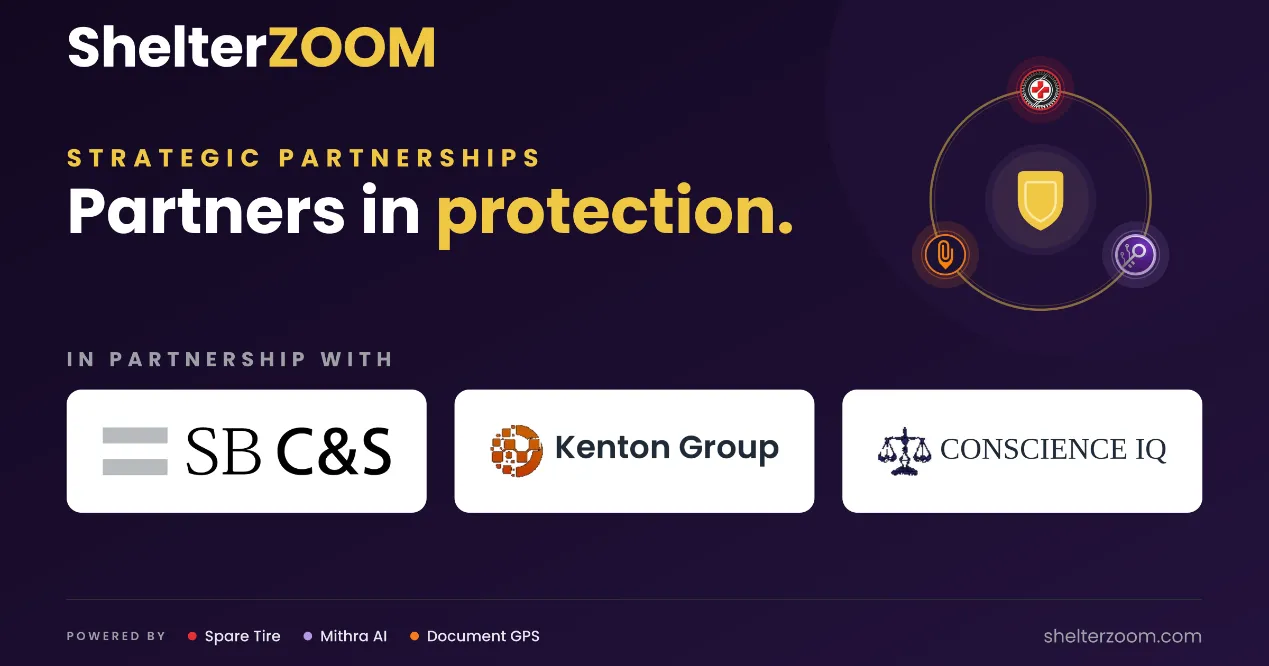
By: Alex Mercer – SeaPRwire – Most companies are rushing to deploy AI. Far fewer can explain where their AI data came from, who touched it, whether it was altered, or how quickly they can recover when systems fail. That gap is becoming expensive. ShelterZoom’s latest partnerships with SB C&S, The Kenton Group, and Conscience IQ reveal a growing realization inside enterprise technology circles: the next phase of cybersecurity is no longer centered solely on preventing attacks. It is increasingly about proving trust, preserving operational continuity, and maintaining confidence in the data feeding AI systems. The official announcement highlights a broad international expansion strategy. Through partnerships with Japan-based SB C&S, U.K.-based The Kenton Group, and AI solution provider Conscience IQ, ShelterZoom is extending the reach of three flagship products across North America, Europe, Asia-Pacific, and the Middle East. The first is Mithra AI, designed to provide verified context, data lineage, governance, and a trusted single source of truth for enterprise AI systems. The second is Document GPS, a document tokenization platform that replaces traditional file sharing with secure document tokens while allowing originators to track access, downloads, screenshots, sharing activity, and document interactions even after distribution. The third is Spare Tire, a cyber and operational resilience platform built to maintain business continuity and prevent downtime, particularly within healthcare environments where electronic health record disruptions can directly affect patient care. The deeper message sits beneath the product descriptions. Enterprises are discovering that AI readiness is increasingly tied to data credibility. ShelterZoom references findings from Fivetran’s 2026 Agentic AI Readiness Index, which identified data quality and lineage, regulatory compliance, sovereignty requirements, privacy concerns, and interoperability challenges as major obstacles to enterprise AI adoption. According to the cited research, 86% of data leaders view interoperability as essential for AI success. In practical terms, organizations are beginning to realize that sophisticated AI models offer limited value if the underlying data cannot be verified. At the same time, healthcare providers face mounting operational risks from ransomware attacks, system outages, and pending regulatory requirements such as HIPAA’s proposed 72-hour restoration rule. Spare Tire is being positioned as a response to that pressure, offering continuous operational capability and synchronized recovery rather than traditional disaster-recovery approaches that activate only after failure occurs. The competitive landscape may look very different over the next several years. Traditional cybersecurity vendors built their businesses around detection, response, and recovery. A new category is emerging around trust verification, data lineage, operational continuity, and AI integrity. ShelterZoom appears determined to claim territory in that category before larger competitors fully mobilize. Whether the company succeeds will depend on execution, distribution reach, and customer adoption. One thing already seems clear: in the AI era, organizations will not be judged solely by how well they protect data. They will also be judged by how convincingly they can prove that the data can be trusted. Author bio: Alex Mercer, a veteran technology analyst and former enterprise systems architect who focuses on cybersecurity, artificial intelligence infrastructure, digital trust frameworks, and emerging enterprise technology markets.

Why a TV Show About Small-Cap Stocks Now Looks More Like a Curated Capital Marketplace Than a Traditional Business Program

By: Christian Brooks – SeaPRwire – The hardest problem for emerging public companies is not building a product. It is getting noticed. Every week, hundreds of small and mid-sized firms compete for investor attention. Most never break through. That reality explains why New to The Street continues to occupy an unusual position in the capital markets. On the surface, tonight’s Bloomberg Television broadcast is another business program. Look closer and it resembles something far more strategic: a media-driven marketplace where companies compete for visibility, credibility, and investor mindshare. The official announcement focuses on the companies appearing in tonight’s 6:30 PM ET broadcast across the United States, Latin America, and the MENA region. The lineup spans a remarkably broad range of industries. Envoy Medical discusses hearing restoration technologies. Big Sky Industrial outlines its helium production strategy, carbon management infrastructure initiatives, and the development of the Big Sky Carbon Hub in Montana. Graphene Manufacturing Group presents advances in graphene production and energy storage technologies. Gold Royalty Corp. provides updates on its growing portfolio of precious-metals royalty interests. BlackBarn Restaurant shares its experience operating in New York City’s highly competitive hospitality market. Additional sponsored segments feature Data Vault Holdings, Lantern Pharma, Medicus Pharma, Roadzen, and FreeCast, exposing viewers to companies active in artificial intelligence, biotechnology, healthcare, insurance technology, and digital media. The deeper story sits behind the guest list. New to The Street is not merely selling airtime. It is selling distribution. According to the company, its business media network now extends across Bloomberg Television, FOX Business, outdoor advertising campaigns, social platforms, digital marketing channels, and two rapidly growing YouTube properties. The flagship New to The Street TV channel has surpassed 4.76 million subscribers, while NewsOut has exceeded 880,000 subscribers. Together, the platforms reach more than 5.7 million subscribers. For many emerging companies, access to that audience may be as valuable as access to traditional investor conferences. In today’s market, visibility often functions as a form of currency. A company that cannot attract attention frequently struggles to attract capital. From an investor’s perspective, the program also reflects a larger shift taking place in financial media. Sector boundaries continue to blur. A single broadcast can move from hearing technology to helium infrastructure, from graphene-based energy innovation to gold royalties, then into artificial intelligence and digital media. Investors are no longer consuming information through narrow industry channels. They are hunting for opportunities wherever growth narratives emerge. That makes platforms like New to The Street less of a television show and more of a discovery engine. The winners will not necessarily be the companies with the most airtime. They will be the firms that can convert visibility into execution, because exposure opens the door, but results keep it open. Author bio: Christian Brooks, a veteran entrepreneur and investor with decades of experience evaluating growth-stage businesses, capital formation strategies, and the evolving relationship between media exposure and market performance.

The Real Battle Isn’t on the Pitch: Why Someone Just Built a Database for Every Controversial Referee Call in Soccer

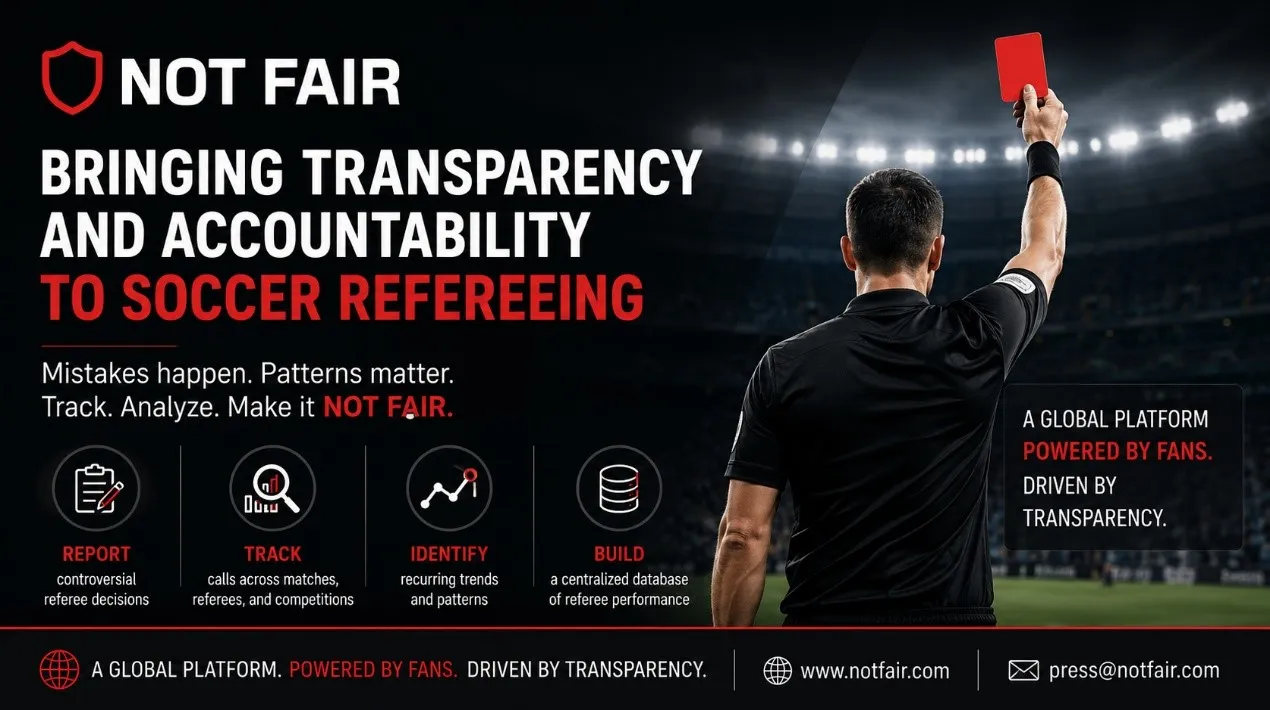
By: James Vance – SeaPRwire – Most soccer arguments die within 48 hours. Fans rage online, television panels replay a controversial decision, and then the conversation moves on to the next match. That cycle is exactly what NotFair.com is trying to break. The newly launched platform is built around a simple idea: instead of debating referee decisions as isolated incidents, collect them, organize them, and study them as data. At a time when global attention is building toward the 2026 FIFA World Cup, the project taps into one of soccer’s most emotional pressure points—whether officiating can ever be examined objectively. According to the company’s announcement, NotFair.com allows supporters to report referee decisions from matches around the world, track those decisions across competitions and seasons, and analyze information submitted by the community. The platform was founded by Hakan Ugdur, who argues that discussions around officiating become more meaningful when they are documented in a structured format rather than scattered across social media posts and post-match debates. The site does not label decisions as right or wrong. Instead, it acts as a repository where fans can contribute observations and explore aggregated trends. The stated goal is transparency through organized information rather than verdicts. The more interesting question is what happens if enough fans actually participate. Soccer has no shortage of opinions. What it lacks is a historical record that ordinary supporters can easily search and compare. A controversial penalty in one league often disappears from public memory within weeks. A disputed red card in another competition rarely becomes part of a larger conversation. By building a database of referee decisions and match incidents, NotFair.com is attempting to turn emotional reactions into a searchable body of evidence. Whether the data ultimately proves anything is secondary. The act of collecting it may be the platform’s biggest contribution. The commercial logic is straightforward. Data tends to become more valuable as it accumulates. If NotFair.com succeeds in creating a comprehensive archive of officiating decisions across global soccer, it could become a reference point for fans, analysts, media commentators, and researchers interested in refereeing trends. The challenge is less about technology and more about participation. Every community-driven platform depends on sustained user contributions. If soccer supporters embrace the idea, referee debates may finally move beyond clips and complaints. If they do not, the platform risks becoming just another forgotten corner of the internet. For now, the outcome depends less on referees and more on whether fans are willing to become data collectors. Author bio: James Vance, a veteran international technology and business commentator who specializes in analyzing how data platforms reshape public discussion, digital communities, and emerging online markets.

Chow Tai Fook Jewellery Reports Record High Profit Brand Transformation Delivering High-quality Earnings Growth

Results Highlights Chow Tai Fook Jewellery delivered strong FY2026 performance on the back of successful brand transformation, achieving high-quality earnings growth against macro uncertainties and significant gold price volatility. Revenue grew 5.3% to HK$94,398 million, underpinned by steady growth from design-led and higher-margin iconic collections. The Group achieved an operating profit of HK$18,850 million (+27.8% YoY) and a record high profit attributable to shareholders of HK$9,004 million (+52.2% YoY). Gross profit margin expanded to 32.3%, supported by higher gold prices and increased contribution from the retail business and design-led jewellery. Operating profit margin expanded 360bps to a five-year high level of 20.0% driven by strong business performance and continued disciplined cost management. Return on Equity (“ROE”) increased to 28.4%, which represented a sustained improvement against our 5-year historical average of 20.5%. The Group opened its first global flagship store in Hong Kong in February 2026, alongside newly designed stores across the Chinese Mainland and key international markets, while expanding into luxury lifestyle categories. The Board has proposed a final dividend of HK$0.45 per share, bringing the full-year total to HK$0.67 per share, a payout ratio of 73.4%, reflecting our commitment to sustained shareholder returns. Financial Summary   For the year ended 31 March 2026 HK$ million 2025 HK$ million YoY Change Revenue 94,398 89,656 +5.3% Gross profit 30,500 26,455 +15.3% Gross profit margin 32.3% 29.5% +280 bps Operating profit(1) 18,850 14,746 +27.8% Operating profit margin 20.0% 16.4% +360 bps Profit attributable to shareholders of the Company 9,004 5,916 +52.2% Earnings per share       Basic (HK$) 0.91 0.59 +53.7% Diluted (HK$) 0.90 0.59 +52.5% Full year dividend per share(2) (HK$) 0.67 0.52 N/A   (1)  Aggregate of gross profit and other income, less selling and distribution costs and general and administrative expenses (2)  The payout ratio for FY2026 approximated 73.4% (Hong Kong, China, 11 June 2026) Chow Tai Fook Jewellery Group Limited (“Chow Tai Fook Jewellery Group”, the “Group” or the “Company”; SEHK stock code: 1929), today announces its annual results for the year ended 31 March 2026 (“FY2026”). Record Results Underscore the Continued Success of Brand Transformation The Group demonstrated strong resilience as revenue grew 5.3% to HK$94,398 million in a year marked by macroeconomic uncertainty and significant gold price volatility. Gross profit margin of 32.3% was up 280bps, driven by the surge in gold price and a higher contribution from the design-led and higher- margin iconic collections, successfully launched since 2024. Operating profit grew 27.8% to HK$18,850 million and profit attributable to shareholders grew 52.2% to a record high HK$9,004 million. Operating profit margin of 20.0% was up 360 bps to a five-year high level. The Group’s Return on Equity (“ROE”) increased to 28.4%, which represented a sustained improvement against our 5-year historical average of 20.5%. The Board has proposed a final dividend of HK$0.45 per share, bringing the dividend per share for the year to HK$0.67, a full-year payout ratio of 73.4%.  The strong performance was powered by a customer centric approach driven by three key levers of growth: (1) Redefining Chinese luxury globally, (2) Rejuvenating portfolio and operational efficiency and (3) Reimagining new horizons. Dr. Henry Cheng, Chairman of Chow Tai Fook Jewellery Group, said, “We are committed to investing boldly in our brand – elevating desirability, forging deeper emotional connection with customers, and expanding our global resonance through immersive retail experience, exquisite craftsmanship, compelling storytelling and digital engagement that blends our rich heritage and cultural artistry with contemporary lifestyle.” Commenting on the annual results, Ms. Sonia Cheng, Vice-chairman of Chow Tai Fook Jewellery Group, said, “We are delighted that the Group achieved record high results and high-quality earnings, validating the success of our brand transformation. As a leading global Chinese luxury group, Chow Tai Fook is charting a course to bring Chinese aesthetics, craftsmanship, and heritage storytelling to the world stage while setting a new benchmark for the industry. Redefining Chinese Luxury Globally The global luxury landscape has been dominated by Western culture. Our ambition is to redefine Chinese luxury globally, showcasing the contemporary Chinese culture, innovation and exquisite craftsmanship to the world. The successful launch of our signature collection – DAWN Collection, has clearly demonstrated Chow Tai Fook’s innovation and creativity, being the first jewellery brand to blend Chinese aesthetics with modern craftsmanship. Since its launch in April 2026 till the end of May 2026, DAWN Collection has delivered remarkable initial results, with Retail Sales Value (“RSV”) of over HK$500 million, outperforming the debut of some of the signature collections to date. Furthermore, more than 20% of customers purchasing this Collection were new to us in the Chinese Mainland, Hong Kong and Macao, underscoring the effectiveness of our signature collections in driving new customer acquisition. During the year, we unveiled our first High Jewellery Collection, “Timeless Harmony”, championing Eastern aesthetics through culturally rooted, world‑class craftsmanship and expanding the brand’s presence in the global high jewellery segment. In March 2026, we appointed David Tse as Global Creative Director, bringing deep luxury expertise from his tenure as Creative Director at Hermès in China, to lead our global storytelling and deepen brand desirability. Blending heritage with contemporary designs, our signature collections continue to resonate with the growing base of culturally conscious consumers. The Rouge Collection, Joie Collection and Chow Tai Fook Palace Museum Collection sustained strong sales momentum in FY2026, contributing close to HK$10 billion to our RSV, while the iconic HUÁ Collection contributed HK$43 billion to our RSV. Rejuvenating Portfolio and Operational Efficiency In February 2026, the Group opened its first global flagship store on Canton Road in Tsim Sha Tsui, Hong Kong, marking a significant milestone in its brand transformation journey. The approximately 10,000-square-foot flagship is the Group’s largest store across Hong Kong and Macao, showcasing the brand’s nearly century-long legacy, craftsmanship and creativity through it’s “Heritage Pavilion” and diverse offerings. The flagship offers consumers an elevated retail experience that reflects our evolving ambition as the leading global Chinese luxury group. As of FY2026, we had a total of 8 newly designed luxury-format stores in prime locations in the Mainland. These stores delivered significantly higher productivity, which was approximately 8 to 10 times the average Same Store Sales (“SSS”). These newly designed stores also had a substantially higher contribution from fixed-price jewellery. We also selectively opened stores in high-footfall locations, backed by enhanced visual merchandising, optimised product mix and elevated retail experience. As a result, the average monthly RSV of new stores aged less than two years reached approximately HK$1.6 million, up 57% YoY. In view of the success of the newly designed luxury-format stores, we plan to expand its network in the Mainland from the current 8 stores to 50 by FY2030. In the Mainland, SSS increased by 6.9% in FY2026, supported by our ongoing brand transformation initiatives and continued store optimisation. In Hong Kong and Macao, consumer demand strengthened notably post Mainland VAT reform on gold trading, with SSS rising 16.8% in FY2026. SSS growth in Hong Kong was 13.3% and Macao was 29.4% for the year. During the year, the Group also advanced digitalisation and launched our in-house AI Agent platform, deploying over 12 agents across functions such as visual merchandising, the GenAI jewellery creative centre, and AI live streaming, to drive operational efficiency and enhance customer engagement. Reimagining New Horizons The Group’s FY2030 ambition is to double the RSV of our international operations compared to FY2026; and to have an international footprint of over 100 stores. In line with our ambition, the Group expanded the Chow Tai Fook universe into new geographies, channels, product categories, and experiences that resonate with the constantly evolving lifestyle and aspirations of customers in FY2026. With the ambition to reshape global luxury and further strengthen our brand influence among global audiences, newly designed luxury-format stores were launched at Jewel Changi Airport in Singapore, Siam Paragon in Bangkok, and Westfield Sydney in Australia – marking our first entry into Oceania. This brings the total number of CHOW TAI FOOK JEWELLERY POS in Other Markets to 63. In FY2027, we will open further newly designed luxury-format stores across Southeast Asia and North America, while exploring opportunities in the Middle East in the next two years. As the first global Chinese jewellery brand to enter the luxury lifestyle arena, the new luxury home-décor line “Chow Tai Fook Home” brings craftsmanship, cultural heritage and attention to detail to refined home décor and functional art, including tableware collections developed in collaboration with renowned French porcelain house Bernardaud, where Western craftsmanship meets Chinese cultural heritage and gold artistry. Together with CTF Accessories which covers hair adornments, gold medallions and watch strap accessories, the new lifestyle offers will capture diverse market segments, broaden our customer base and create synergies with our core jewellery business. In FY2026, we continued to collaborate proactively with renowned IPs to reach new audiences. Our Black Myth Collection received overwhelming market response, with a significantly higher male mix than the Group average. Meanwhile, collaborations with Disney, Chiikawa and the NBA attracted new loyalty members, which accounted for 35%–55% of these IP collaborations’ customers, with a significant percentage of younger generations. HEARTS ON FIRE, a member of the Group, has continued its transformation into a modern global luxury diamond jewellery brand within the Group. During the year, HEARTS ON FIRE delivered resilient performance with its iconic INSIDE/OUT Collection contributing to 13% of the brand’s global revenue. The brand also expanded its retail presence in Asia with five new luxury retail locations, strengthening visibility in key luxury markets. Business Outlook The strong financial and operational performance highlights the success of our brand transformation strategy and paves the way for further growth. We are now entering the definitive phase of our multi-year transformation journey to our centenary in 2029, accelerating the pace and ensuring the precision of our full-scale strategic execution in FY2027 and beyond. Our sharpened focus is on elevating brand desirability, enriching the retail experience, and strengthening product differentiation. Despite continuing external market volatility and macroeconomic uncertainty, we remain cautiously optimistic in the markets where we operate. We are firmly committed to our brand transformation journey – redefining Chinese luxury globally, rejuvenating portfolio and operational efficiency and reimagining new horizons. We will continue to rigorously uphold financial discipline in cost and capital management, driving high-quality growth, sustainable earnings and returns for our shareholders. FY2030 Ambitions As we approach our centenary, we envision a Chow Tai Fook universe where jewellery seamlessly intertwines with the lifestyle of our customers – enriching their appreciation of cultural heritage, artistry, and craftsmanship. We see luxury as a universal language that transcends borders and cultures, where jewellery and lifestyle come together to express a shared vision of beauty, elegance, and creativity. Looking ahead to FY2030, we have set out the following ambitious targets: Financial performance: We aim to achieve above-market revenue growth, and sustain a high ROE of above 25% by FY2030; Store network evolution: We target to complete the full renovation and elevation of our POS portfolio by FY2030, delivering a cohesive and distinctive retail experience across all locations. In parallel, we plan to expand our network of newly designed luxury-format stores in the Mainland from the current 8 stores to 50 by FY2030; International expansion: We aim to double the RSV of our international operations compared to FY2026; and to have an international footprint of over 100 stores. Sustainability: We will target a 50% reduction in Greenhouse Gas emissions by FY2030, using FY2024, the first year of our brand transformation journey, as the base year. Chow Tai Fook Jewellery Group Limited Since its founding in 1929, CHOW TAI FOOK, the flagship brand of Chow Tai Fook Jewellery Group, has been celebrated for its bold designs and meticulous attention to detail. Our commitment to innovation and craftsmanship has made us synonymous with excellence, value, and authenticity. As the global Chinese luxury group, we blend contemporary designs with traditional techniques to create timeless pieces. Each collection reflects our customers’ stories and lives, celebrating their special moments. We aspire to inspire and captivate generations to come, weaving the story of CHOW TAI FOOK into their own. Our brand portfolio includes the iconic CHOW TAI FOOK flagship brand, HEARTS ON FIRE, ENZO, and MONOLOGUE, offering a wide variety of products that also includes an expanding range of cutting-edge IP collaborations. With over 5,000 stores worldwide, we offer a seamless client journey across all touchpoints that includes a network across China as well as a growing number of global locations. Chow Tai Fook Jewellery Group Limited (SEHK: 1929) has been listed on the Main Board of the Hong Kong Stock Exchange since December 2011. We are committed to delivering sustainable long-term value for our stakeholders by continually enhancing earnings quality and driving higher value growth.   Media Enquiries: Chow Tai Fook Jewellery Group Limited Haide Ng Associate Director, Corporate Communications Tel: (852) 3115 4402 Email: haideng@chowtaifook.com 11/06/2026 Dissemination of a Financial Press Release, transmitted by EQS News. The issuer is solely responsible for the content of this announcement. Media archive at www.todayir.com
WHAT WATON’S NEW PLATFORM – MoTA IS DESIGNED TO HELP USERS DO

EQS Newswire / 09/06/2026 / 16:00 UTC+8 (9 June 2026, Hong Kong) Waton Financial Limited Unveils MoTA: An AI-Native Investment Team Operating System and Agent Marketplace That Lets Anyone Build, Manage, and Command Their Own Professional Investment Research Team Waton Financial Limited today unveiled MoTA (Manager of Trading Agents), an AI-native investment team operating system and Agent marketplace that redefines what AI can do for investors. MoTA is not a stock-picking chatbot or a black-box trading bot. It is a platform designed to let users build, manage, and command their own team of specialized AI Agents across the full investment workflow — from portfolio definition to trade execution. The Problem Professional investment research has always required a team: factor researchers, fundamental analysts, technical analysts, risk managers, portfolio constructors, and trade execution officers. Each role demands specialized talent and expensive infrastructure. For individual investors and small teams, assembling such a capability has been cost-prohibitive — until now. The Solution MoTA transforms the user from a passive consumer of AI signals into an active leader of an AI-powered investment team. Its four integrated modules work together to deliver a seamless, end-to-end experience. First, Talents — the Agent Marketplace. Users browse, compare, and hire specialized AI Agents by role. Each Agent is purpose-built for a specific investment function — fundamental analysis, technical analysis, risk management, trade execution, and more. Agents can be swapped and composed as strategies evolve. Second, Team — composing your investment team. Users assemble multiple Agents into a structured team. Analysts feed research inputs, the Portfolio Manager evaluates and writes memos, the Risk Manager reviews exposure, and the Trader validates routing. The human user retains final sign-off authority at every stage. Third, Portfolio — the portfolio cockpit. A real-time overview of holdings, assets, P&L, risk, and exposure. Users see exactly what is moving across positions, where risk sits, and where returns originate — all in one unified view. Fourth, Decision — the Decision Center. Every Agent-generated suggestion surfaces in the Decision Center with full context: source Agent, signal, reasoning, and current status. Users can click into the full workflow or execution path, compare competing analyses, and manage an actionable queue of decisions. Every recommendation is structured, traceable, and auditable. These four modules connect in a continuous workflow: Portfolio to Decision to Team to Trade. Why MoTA Is Different Traditional AI investing tools offer a single AI chat box, scattered research answers, black-box signals, no role separation, and AI value that is hard to measure. Reviews are tied to AI silos. MoTA provides a multi-Agent investment team, a connected Portfolio-to-Trade workflow, an auditable Decision Center, dedicated Analyst and PM and Risk and Trader roles in coordination, unified metrics such as ROI and win rate and cost per run and override rate, and a unified path for portfolio, decisions, Agents, and trades. The Vision Behind MoTA Waton Financial Limited's mission with MoTA is clear: to make professional-grade multi-agent investing tools more accessible, more transparent, and more user-controlled. MoTA does not replace human judgment — it amplifies it. The platform frees users from the burden of being a full-stack investment expert and elevates them to a higher role: the builder, manager, and decision-maker of their own AI investment team. As AI moves from content generation into workflow execution, investing — inherently a multi-role, multi-step, multi-constraint process — is a natural fit for this transformation. MoTA is designed to bridge the gap between what AI can do and what the investment workflow actually needs. About MoTA MoTA (Manager of Trading Agents) is Waton Financial Limited's flagship AI-native investment team operating system and marketplace for specialized investing Agents. It enables users to create fully customizable investment teams, assign specialized AI Agents to each role, and receive structured, traceable, and auditable investment suggestions across the entire Portfolio-to-Trade workflow. About Waton Financial Limited Waton Financial Limited is a publicly listed financial services and technology company that designs, owns, and operates the MoTA platform. Waton is committed to building AI-native infrastructure for investment teams and making professional-grade multi-agent investing tools accessible to a broader audience. Welcome to MoTA. Welcome to the new era of investing.   Media Contact Email: ir@watonfinancial.com Website: https://wtf.us Explore MoTA: https://mota.ai   Disclaimer: This press release contains forward-looking statements. Actual results may differ materially from those expressed or implied. This is not investment advice. Past performance does not guarantee future results. 09/06/2026 Dissemination of a Financial Press Release, transmitted by EQS News. The issuer is solely responsible for the content of this announcement. Media archive at www.todayir.com View original content: EQS News

Hitachi Energy expands zero-emission power portfolio with HyFlex Compact

LONDON, June 12, 2026 - (JCN Newswire via SeaPRwire.com) - Hitachi Energy, a global leader in electrification, has introduced HyFlex® Compact - a hybrid generator and flexible power hub that provides zero-emission electricity for temporary and off-grid applications such as construction projects and other infrastructure. The configurable system combines hydrogen fuel cells with high-performance batteries and can integrate additional power sources, delivering stable AC power as a clean alternative to diesel generation.As electricity demand rises, companies across industry and infrastructure are electrifying operations and cutting emissions, often in locations where grid connections are limited or unavailable. This is increasing demand for flexible power solutions that can perform reliably acrossa wide range of operating conditions, from remote sites to grid-connected environments.Addressing these requirements calls for power solutions that go beyond single technologies, supported by robust system expertise and integration capabilities. Designed for standalone orgrid-connected operation, Hitachi Energy’s HyFlex Compact combines hydrogen fuel cells, batteries, power electronics, cooling, and auxiliaries in a single, portable enclosure, all managed by an optimized control system. The system converts hydrogen into clean electricity using fuel cells, producing power, heat, and water with no harmful emissions.With optional AC and DC input modules, Hyflex Compact can operate as a mobile microgrid, connecting multiple energy assets, providing stable AC power whenever and wherever it is needed. This enables more efficient operation and reduces reliance on hydrogen when additional power sources are available.“The energy system is being asked to deliver more electricity, with lower emissions and higher resilience, often in places where the grid was never designed for today’s demands,” said Marco Berardi, Head of Grid & Power Quality Solutions and Service at Hitachi Energy. “HyFlex Compact brings together different technologies through system integration expertise to support a secure electricity supply as energy systems evolve, while helping companies move toward lower emission power.”HyFlex Compact is suitable for applications across a wide range of operating environments, from construction sites and temporary infrastructure such as events and festivals to electric vehicle charging, mining operations, remote industrial sites, critical infrastructure, and hard-to-abate operating environments.The introduction of the flexible power hub marks an evolutionary step, building on Hitachi Energy’s earlier HyFlex developments. Initial pilots explored hydrogen-to-power applications and provided valuable insight into integrating fuel cells, power electronics, and control systems in real-world operating environments1.Hitachi Energy continues to bring flexible, low-emission solutions to market, underpinned by its expertise in power electronics and system integration. Recent investments in power electronics capabilities, including the inauguration of the Grid & Power Quality Solutions and Service Test Center in Västerås, Sweden, and the announcement of a new Power Electronics Center of Competence in the United States*1, underscore the company’s focus on strengthening the technologies needed to support secure, affordable, sustainable and resilient electricity systems.*1 Hitachi Energy expands its U.S. footprint with $10 million USD investment in North Carolina to meet surging electricity demandSome of HyFlex pilot projectsHitachi Energy and Air Products pioneer zero-emission construction site in the NetherlandsHitachi Energy’s pioneers HyFlex hydrogen-powered generator with shore power system for ships at berthHitachi Energy enables decarbonization of construction site in SwedenAbout Hitachi EnergyHitachi Energy is a global leader in electrification, powering the electricity era to meet the energy demands of today, and the next 25 years. As the energy arm of Hitachi Group, over three billion people depend on our pioneering, mission critical technologies to power their daily lives. With over a century of innovation, we are addressing the most urgent energy challenge of our time: driving the evolution of the world’s energy system to ensure abundant, secure, affordable, and sustainable power for today’s generation and the next. With an unparalleled installed base in over 140 countries, we are the grid ecosystem partner across the utility, industry, data center, and transportation sectors. Headquartered in Switzerland, we employ over 56,000 people in 60 countries and generate revenues of around $20 billion USD.Https://www.hitachienergy.comhttps://www.linkedin.com/company/hitachienergyhttps://x.com/HitachiEnergy About Hitachi, Ltd.Through its Social Innovation Business (SIB) that brings together IT, OT(Operational Technology) and products, Hitachi aims to be a global leader in continuously transforming social infrastructure through digital, contributing to a harmonized society where the environment, wellbeing, and economic growth are in balance. Hitachi operates worldwide across four sectors - Digital Systems & Services, Energy, Mobility, and Connective Industries - as well as a Strategic SIB Business Unit focused on new growth areas. With Lumada at its core, Hitachi creates value by combining data, technology and domain knowledge to solve customer and social challenges. Revenues for FY2025 (ended March 31, 2026) totaled 10,586.7 billion yen, with 606 consolidated subsidiaries and approximately 290,000 employees worldwide. Visit us at www.hitachi.com.   Copyright 2026 JCN Newswire via SeaPRwire.com. All rights reserved. www.jcnnewswire.com

瑞士公投鎖定1000萬人口上限,羅氏、雀巢為什麼怕到發抖?

(SeaPRwire) -   By: Christian Pierce 瑞士即將舉行全球首見的人口上限公投。羅氏、雀巢等跨國企業集體陷入恐慌。這項由右翼瑞士人民黨推動的提案,一旦通過,會切斷企業引進國際人才的通道。瑞士的經濟增長動力,將被直接斬斷。 6月14日,瑞士選民將投票決定是否把人口上限設在1000萬。目前瑞士人口為910萬。瑞士研究機構Gfs.bern的民調顯示,45%的潛在選民傾向支持,52%反對,還有3%未決定。若提案通過,政府必須在2050年前阻止人口突破上限。當永久居民達到950萬時,會收緊庇護與家庭團聚政策。若超過1000萬,甚至可能終止與歐盟的人員自由流動協議。2002年簽署這項協議後,瑞士人口增長近200萬,GDP從3140億美元躍升至超過1萬億美元。瑞士現有30%人口出生於國外,企業高度依賴外籍高技能人才。同時,瑞士正面臨嚴重的人口老齡化問題,每100名勞動人口對應30.2名老年撫養者,創歷史新高。 若公投通過,羅氏這類研發密集型企業將直接受創。瑞士本土市場無法供應足夠的高級人才,研發速度會大幅放緩。雀巢等跨國企業也會失去全球競爭力,瑞士作為全球人均財富500強企業最多的國家,其商業樞紐地位將被削弱。更嚴重的是,終止與歐盟的人員自由流動協議,會連帶影響其他經貿協議,讓瑞士經濟陷入長期停滯。 Author bio: Christian Pierce,資深財經專欄作家,專注全球企業戰略與市場趨勢分析,為多家國際媒體撰稿。

Hitachi Energy unveils AxoniQ: game-changing solution for the next era of transmission grids

LONDON, June 12, 2026 - (JCN Newswire via SeaPRwire.com) - Hitachi Energy, a global leader in electrification, today announced the launch of AxoniQ™, its comprehensive portfolio of solutions for multi-terminal direct current(MTDC) systems. As global electricity demand accelerates, MTDC systems are becoming critical to ensuring a secure, affordable, and sustainable power grid. As renewable energy deployment accelerates and power systems become increasingly interconnected, MTDC systems help manage congestion and improve resilience by allowing dynamic power flow between multiple terminals and across different energy markets, while supporting faster planning, procurement, and execution of grid projects. By connecting multiple power sources and demand points, MTDC grids enable electricity to be directed where it is needed most.ENTSO E’s Offshore Network Development Plans 2024 report*1 highlights that by 2040, Europe is moving into a massive scale-up phase of offshore renewables, which requires major transmission expansion and early hybrid grids. Grids developed with MTDC systems can boost transmission capacity up to nearly threefold in a 2040 scenario.*1 Offshore Network Development Plans European offshore network transmission infrastructure needsAchieving the same capacity and reliability without these solutions would require substantial capital investment. Optimized assets not only translate into fewer converter stations, but also into fewer power cables and lines and a reduced use of land and materials, underpinning a more sustainable energy system for the benefit of both society and the environment.Marking a significant step toward greater interoperability, the launch of AxoniQ comes as governments and grid operators worldwide accelerate investments in transmission infrastructure toward a fully electrified world to integrate renewable energy at scale, strengthen cross-border interconnections, and improve energy security.The AxoniQ portfolio combines advanced power electronics and control technologies. It includes:AxoniQ Protect: An innovative solution that can interrupt a DC fault in less than three milliseconds, it offers fast and effective protection at up to 525 kilovolts (kV). It enables selective fault isolation by disconnecting only the affected section of the DC grid, while the rest of the system continues operating. This continuous, proactive protection enables extremely low losses and the optimal combination of performance, efficiency, and reliability throughout the entire lifecycle.AxoniQ Connect: A modular DC switching station that enables the connection of new terminals and structures the grid into several protection zones, creating manageable subsystems. AxoniQ Connect ensures reliable service continuity, simplifies maintenance, and supports cost-efficient scalability.AxoniQ Control: An advanced control system built with interoperability in mind that maintains voltage stability and power balance, optimized power flow, and flexible, market-driven energy exchange. AxoniQ Control addresses congestion and enables quick reconfigurations in the event of disturbances.Together, the AxoniQ suite of cutting-edge power electronics solutions enables the re-routing of power in real time, rapid fault isolation, and maintaining continuity of power supply while minimizing the impact on the wider grid and avoiding the risk of costly power interruptions. Engineered for interoperability by design, AxoniQ will continue to evolve to enable a sustainable expansion of direct current (DC) grids in the decades ahead.“Electricity networks are becoming increasingly complex as renewable generation grows and demand patterns evolve. AxoniQ represents a milestone in the evolution of DC grids, enabling the next generation of HVDC systems, helping grid operators integrate renewable power more reliably and affordably while improving grid resilience and transmission efficiency,” said Niklas Persson, CEO, Grid Integration Business Unit at Hitachi Energy. “Hitachi Energy is pioneering the new technology needed today and helping ensure future prosperity.”The AxoniQ family is part of Hitachi Energy’s Grid-enSure®, a fully integrated solution portfolio to stabilize power systems by strengthening transmission, managing frequency variations and system voltage and addressing capacity constraints. AxoniQ takes its name from axons, the part of a nerve cell (neuron) that carries electrical signals away from the cell body to other neurons, muscles or glands, effectively functioning as the body’s electrical system. Like axons, AxoniQ brings power to life across the grid – intelligently and effectively transmitting electricity between multiple sources and demand points, acting as the vital connection that enables amore responsive, resilient, and interconnected energy system.AxoniQ has been researched and developed by Hitachi Energy for more than a decade, and its benefits are demonstrated through the company’s work in partnership with TSOs and main industry players with the aim of making future HVDC systems mutually compatible and interoperable by design.About Hitachi EnergyHitachi Energy is a global leader in electrification, powering the electricity era to meet the energy demands of today, and the next 25 years. As the energy arm of Hitachi Group, over three billion people depend on our pioneering, mission critical technologies to power their daily lives. With over a century of innovation, we are addressing the most urgent energy challenge of our time: driving the evolution of the world’s energy system to ensure abundant, secure, affordable, and sustainable power for today’s generation and the next. With an unparalleled installed base in over 140 countries, we are the grid ecosystem partner across the utility, industry, data center, and transportation sectors. Headquartered in Switzerland, we employ over 56,000 people in 60 countries and generate revenues of around $20 billion USD.Https://www.hitachienergy.comhttps://www.linkedin.com/company/hitachienergyhttps://x.com/HitachiEnergyAbout Hitachi, Ltd.Through its Social Innovation Business (SIB) that brings together IT, OT (Operational Technology) and products, Hitachi aims to be a global leader in continuously transforming social infrastructure through digital, contributing to a harmonized society where the environment, wellbeing, and economic growth are in balance. Hitachi operates worldwide across four sectors – Digital Systems & Services, Energy, Mobility, and Connective Industries – as well as a Strategic SIB Business Unit focused on new growth areas. With Lumada at its core, Hitachi creates value by combining data, technology and domain knowledge to solve customer and social challenges. Revenues for FY2025 (ended March 31, 2026) totaled 10,586.7 billion yen, with 606 consolidated subsidiaries and approximately 290,000 employees worldwide. Visit us at www.hitachi.com.  Copyright 2026 JCN Newswire via SeaPRwire.com. All rights reserved. www.jcnnewswire.com